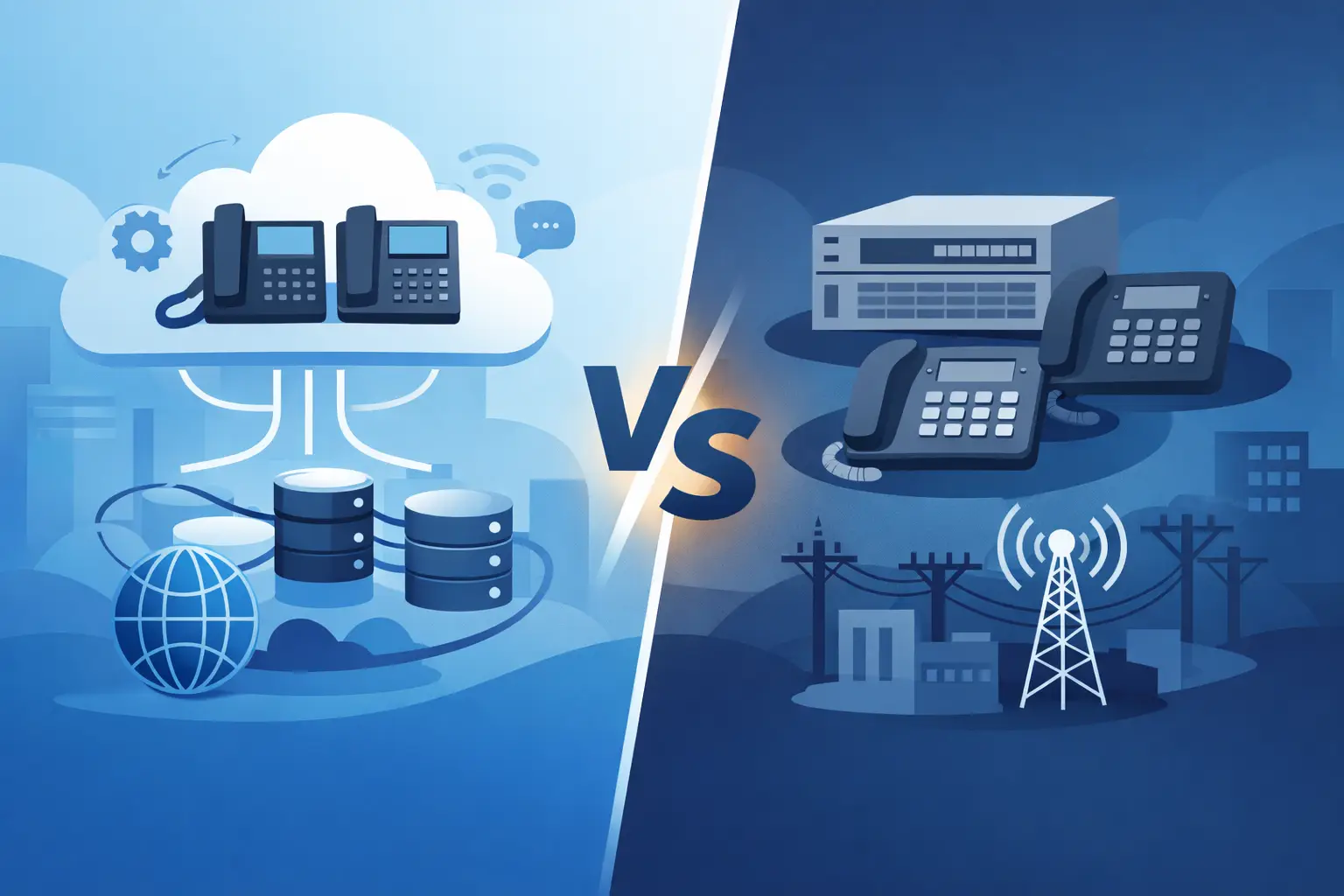
When a phone circuit fails at a campus, hospital, or municipal office, the issue is rarely just about dial tone. It affects call routing, staffing, customer response times, and in some environments, regulatory obligations. That is why the decision around SIP trunking vs PRI deserves more than a simple feature checklist. It is a business infrastructure choice with real operational consequences.
For organizations still running legacy voice services, PRI often feels familiar and stable. It has supported enterprise telephony for decades, and many IT teams know exactly how it behaves. SIP trunking, by contrast, shifts voice traffic onto IP networks and opens the door to more flexible, cloud-based communications. The right choice depends on your current environment, your growth plans, and how much reliability, scalability, and compliance matter in daily operations.
SIP trunking vs PRI: the core difference
PRI, or Primary Rate Interface, is a traditional telecom service delivered over physical copper or fiber circuits. In the United States, each PRI typically provides 23 bearer channels for voice and one signaling channel. That fixed structure has long made PRI a standard option for businesses with on-premises PBX systems and predictable call volumes.
SIP trunking, or Session Initiation Protocol trunking, delivers voice service over an internet connection or private IP network instead of dedicated legacy circuits. Rather than buying voice capacity in fixed blocks of 23 channels, organizations can often scale capacity more precisely to actual demand. SIP also supports modern communications architectures more naturally, including hybrid deployments, cloud voice, and distributed users.
That difference matters because most businesses no longer operate from a single office with a static headcount. They are supporting remote teams, multiple sites, seasonal demand shifts, and tighter cost controls. A voice platform that can adapt to those realities has clear advantages.
Where PRI still makes sense
PRI is not obsolete simply because newer technology exists. In some environments, it remains a workable option.
Organizations with older PBX systems may prefer PRI because it integrates directly with existing hardware and avoids immediate infrastructure changes. If a business has highly consistent call volumes and no plans to expand, a PRI setup can remain serviceable for a period of time. Some teams also value the physical separation of voice circuits from the data network, especially if their IP environment is underdeveloped or poorly managed.
That said, those benefits usually come with limits. PRI capacity is fixed. If you need more channels, you typically add another circuit, whether you use all of it or not. Lead times for installation and changes can also be longer. As carriers continue shifting away from legacy infrastructure, support and availability may become less attractive over time.
Why many organizations are moving to SIP trunking
SIP trunking is often the better fit for modern communications because it aligns with how businesses now operate. Capacity is more flexible, deployment is generally faster, and voice services can be extended across multiple locations without the same dependence on physical lines.
Cost is one of the biggest drivers. PRI often requires paying for full circuit blocks, while SIP services can be structured around more efficient usage models. For organizations managing multiple sites, consolidating voice services through SIP can reduce both carrier complexity and recurring expenses.
Flexibility is another major factor. If your call volume changes due to growth, seasonality, or new programs, SIP capacity can usually be adjusted more easily than PRI. That matters for school districts during registration periods, public agencies during emergencies, and commercial organizations with fluctuating support demand.
SIP also better supports business continuity. Calls can be rerouted more easily in the event of an outage, office closure, or site disruption. For organizations with dispersed staff or continuity requirements, that routing agility is difficult to ignore.
Cost is not just about the monthly bill
A direct comparison of SIP trunking vs PRI often starts with recurring service cost, but that only tells part of the story. The broader cost picture includes hardware maintenance, change management, disaster recovery planning, and how efficiently the system supports the business.
With PRI, legacy PBX dependencies can increase maintenance exposure. Moves, adds, and changes may require more effort. Expanding service can mean ordering new circuits and waiting for carrier provisioning. If your business is paying for unused channels because demand does not line up neatly with PRI increments, those inefficiencies add up.
SIP trunking can lower costs, but only when the network and voice design are handled properly. Voice traffic depends on IP connectivity, so bandwidth, quality of service, and failover planning matter. A poorly designed SIP environment can create service issues that erase the expected savings. A properly engineered one can improve both cost control and uptime.
For procurement and IT leaders, the better question is not simply which option is cheaper. It is which option delivers the best long-term operational value for your communications environment.
Reliability depends on architecture, not nostalgia
One reason some organizations hesitate to leave PRI is the perception that traditional circuits are inherently more reliable. That assumption is understandable, but it is no longer universally true.
PRI has historically offered predictable performance because it runs on dedicated circuits. But reliability also depends on the carrier’s legacy network, the condition of local infrastructure, and the resilience of your on-premises equipment. If a physical circuit is damaged, recovery may not be quick.
SIP trunking reliability depends on network readiness and redundancy design. With the right provider, SIP can support geographic failover, diversified connectivity, proactive monitoring, and flexible call rerouting strategies. In practice, that can create a more resilient environment than a single fixed PRI circuit.
For regulated organizations, resilience is not optional. It needs to be planned, documented, and tested. That is one reason many enterprises, education systems, and government-related organizations are reevaluating legacy voice services through a business continuity lens rather than a comfort-based one.
SIP trunking vs PRI for compliance-sensitive environments
If your organization operates under CMMC, FedRAMP, GCC High, or other strict standards, the decision becomes more nuanced. Voice service is not just a utility. It is part of the security and compliance posture.
PRI can appear simpler because it is tied to legacy infrastructure, but simplicity does not automatically equal compliance readiness. Older systems may be harder to monitor, harder to scale securely, and harder to align with modern communications policies.
SIP trunking can support more advanced security and operational controls, but provider selection is critical. The service needs to be designed with appropriate redundancy, session security, infrastructure visibility, and deployment support. In regulated environments, voice architecture should also align with broader cloud and collaboration strategies rather than operate as an isolated legacy service.
This is where a consultative provider matters. A generic telecom offering may deliver dial tone. It may not deliver the design discipline required for secure and compliant voice operations.
How to decide between SIP and PRI
The best decision usually starts with five practical questions. How old is your current phone system? How predictable is your call volume? Do you need to support multiple locations or remote users? What are your uptime and failover requirements? Are compliance obligations shaping your telecom decisions?
If you are maintaining an older PBX with stable demand and short-term budget constraints, PRI may remain acceptable as an interim option. If you are planning a migration to cloud communications, consolidating carriers, improving continuity, or supporting a distributed workforce, SIP trunking is usually the stronger long-term choice.
The timing of the move matters too. Many organizations do not replace PRI because it has already failed. They replace it because they see the cost, support, and continuity risks of waiting too long. A planned transition is almost always less disruptive than an urgent one.
For that reason, an assessment is often the smartest first step. Review your existing circuits, call paths, PBX environment, bandwidth readiness, and compliance needs. From there, you can determine whether a phased migration, a hybrid model, or a full SIP deployment makes the most sense.
The bigger shift behind the PRI decline
The real issue behind SIP trunking vs PRI is not just technology preference. It is that business communications have changed. Voice is no longer confined to a wiring closet in one building. It needs to support cloud platforms, hybrid work, continuity planning, and security expectations that legacy telecom was never designed to meet.
That does not mean every organization should rip out PRI tomorrow. It does mean the burden of proof has shifted. The question is no longer whether SIP trunking is mature enough for enterprise use. The question is whether PRI still supports the business as effectively as a modern alternative.
For many organizations, the answer is already clear. And for those still evaluating the path forward, working with a provider like Intuity can help turn a telecom comparison into a practical migration plan grounded in reliability, compliance, and long-term fit.
The smartest phone infrastructure decisions tend to happen before a legacy service becomes a problem. That gives your team time to choose based on strategy, not urgency.