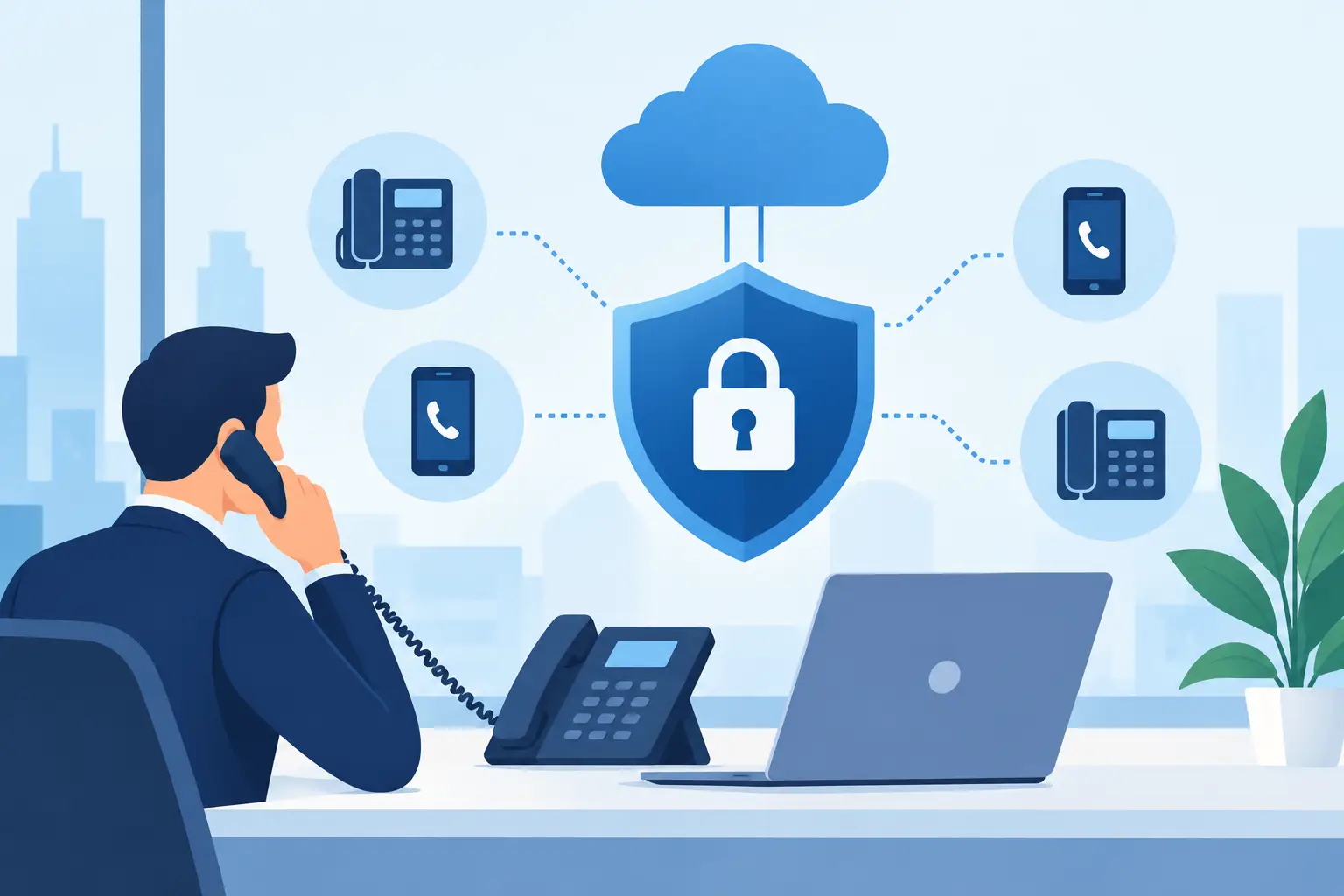
A compromised SIP trunk can become an expensive operational incident in a matter of hours. Unauthorized international dialing, disrupted inbound service, call interception, and exposure of sensitive information can all stem from a voice environment that was treated as a simple network connection. Knowing how to secure SIP trunks means treating voice as a critical business service with defined security controls, monitoring, and recovery procedures.
For commercial organizations, schools, and public-sector entities, the right approach balances protection with call quality and administrative practicality. Security settings that are too broad create risk. Settings that are too restrictive can block legitimate remote users, failover routing, or integrations. The goal is a controlled, resilient voice environment that supports daily operations without creating avoidable complexity.
How to Secure SIP Trunks at the Network Edge
The session border controller, or SBC, is the primary security boundary between an organization’s private voice environment and the service provider network. It should not be optional for an enterprise SIP deployment. An SBC validates signaling, manages call sessions, applies routing policies, and helps shield the PBX or unified communications platform from direct exposure to the public internet.
A properly configured SBC can reject malformed SIP traffic, limit connection attempts, normalize signaling between platforms, and prevent unauthorized endpoints from registering. It also gives IT teams a controlled point for encryption, call admission control, and audit logging. For organizations using Microsoft Direct Routing, the SBC is especially central because it manages the connection between Teams and the public telephone network.
Place the SBC in a segmented network zone rather than on the same flat network as user devices or core servers. Allow only required SIP signaling and media traffic through the firewall, using explicit access control rules. Avoid permissive rules such as allowing SIP traffic from any internet address. Where a carrier provides known signaling IP ranges, restrict access to those ranges and review them whenever the service configuration changes.
Network address translation can complicate VoIP traffic, particularly when SIP application-layer gateway features are enabled on a firewall. In many business environments, SIP ALG modifies packets in ways that interfere with registration, audio, or encryption. Test the feature carefully and disable it when it is not required by the architecture.
Encrypt Signaling and Voice Media
SIP signaling contains information that should not be exposed, including phone numbers, call-routing details, and potentially authentication information. Use Transport Layer Security, or TLS, to encrypt SIP signaling between the SBC, PBX, carrier, and supported endpoints. Use Secure Real-Time Transport Protocol, or SRTP, to protect the voice media itself.
Encryption is not a one-time setting. Certificates must be issued by an appropriate authority, installed correctly, renewed before expiration, and monitored over time. An expired certificate can interrupt calling just as surely as a network outage. Assign ownership for certificate lifecycle management and document which systems depend on each certificate.
There are trade-offs to consider. Legacy phones, older PBX platforms, and some analog adapters may not support current TLS and SRTP requirements. In those cases, replacing or isolating unsupported equipment is generally safer than weakening the security posture for the entire voice environment. Organizations with compliance obligations should also verify that their encryption configuration aligns with the requirements governing their communications data.
Control Identity, Access, and Calling Permissions
SIP trunk security depends as much on access management as it does on network controls. Administrative portals, PBX consoles, SBC interfaces, and cloud communications dashboards should require unique user accounts and multi-factor authentication wherever available. Shared administrator credentials make it difficult to investigate changes, revoke access quickly, or demonstrate accountability during an audit.
Apply least-privilege access. A help desk user who needs to reset voicemail should not have authority to modify outbound dialing rules. A branch office administrator may need to manage local call flows but should not automatically gain enterprise-wide configuration access. Review administrator and vendor access on a scheduled basis, especially after staffing changes or completed projects.
Outbound dialing policies are equally important. Toll fraud often occurs when attackers gain access to a voice system and place high-cost calls before anyone notices. Limit international dialing, premium-rate calling, and other high-risk destinations to users or departments with a documented business need. Set reasonable limits on concurrent calls and total call duration, with exceptions approved through a clear process.
Use strong, unique credentials for SIP authentication when registration-based trunks or remote endpoints are part of the design. Do not reuse voicemail PINs, portal passwords, or default device credentials. For IP-authenticated trunking, the control shifts toward protecting the approved network path and preventing unauthorized traffic from reaching the service.
Keep the Voice Platform Patched and Segmented
Attackers frequently target known weaknesses in PBX software, softphones, routers, and management interfaces. Maintain an inventory of every system involved in call delivery: SBCs, PBXs, gateways, desk phones, analog adapters, firewalls, and cloud administration tools. Without that inventory, teams cannot reliably identify vulnerable components or understand the impact of an update.
Establish a patching process that accounts for voice availability. Test significant updates in a nonproduction environment when possible, schedule maintenance windows, and maintain rollback procedures. Delaying every update to avoid disruption is risky, but applying updates without testing can also affect call routing or endpoint compatibility.
Separate voice infrastructure from general user traffic with VLANs and firewall policies. Segmentation will not stop every attack, but it reduces the chance that a compromised workstation can directly reach the PBX, SBC, or phone management network. Management interfaces should be accessible only from approved administrative networks or through secured remote access methods, never openly from the internet.
Monitor for Fraud, Abuse, and Service Degradation
Security controls are most effective when paired with active monitoring. Review call detail records, authentication failures, configuration changes, and unusual call patterns. Indicators worth investigating include repeated registration attempts, sudden increases in international calls, unusual after-hours activity, high concurrent-call counts, and calls that exceed normal duration thresholds.
Automated alerts shorten the gap between an incident and a response. A finance or operations team may be the first to notice an unexpected telecommunications charge, but that is too late to serve as the primary fraud control. Configure alerts for spending thresholds, dialing-policy violations, failed authentication spikes, and trunk capacity anomalies.
Monitoring should also include service quality. Packet loss, jitter, latency, and failed call attempts may point to a network issue, but they can also reveal misconfiguration, denial-of-service activity, or unauthorized traffic consuming available capacity. Security and reliability are closely connected in a voice environment.
Build Recovery into the SIP Trunk Design
A secure SIP trunk must remain usable when a component fails. Redundant SBCs, diverse internet connections, geographically appropriate failover routes, and alternate calling procedures can reduce the business impact of outages. The best design depends on call volume, site count, regulatory needs, and the cost of downtime.
Document what happens if the primary PBX, internet connection, carrier route, or physical location becomes unavailable. Determine where inbound calls should be redirected, who can authorize emergency routing changes, and how staff will communicate if normal voice channels are impaired. Test these procedures regularly rather than assuming failover will work as configured.
For government agencies, contractors, and other regulated organizations, recovery planning should also address audit evidence, data handling, and authorized service boundaries. A calling workaround that restores service but bypasses required security controls may create a separate compliance problem.
Make Security a Shared Operating Practice
SIP trunk security is not solely the responsibility of the telecommunications provider or the internal network team. It requires clear ownership across IT, security, operations, and any managed service partners. Providers should define their responsibilities for carrier-side protections, service monitoring, and support escalation. Customers should define who manages credentials, endpoint updates, network changes, and dialing policies.
A consultative provider can help validate architecture, identify exposure points, and align service design with operational requirements. Intuity works with organizations that need secure, dependable cloud voice infrastructure without forcing a one-size-fits-all configuration onto every location or user group.
The most useful next step is to review your current voice environment before an incident forces the issue. Map the call path, confirm who can administer each component, test encryption and failover, and verify that unusual calling activity will generate an actionable alert. Those practical checks turn SIP trunk security from a checklist item into a dependable part of business continuity.