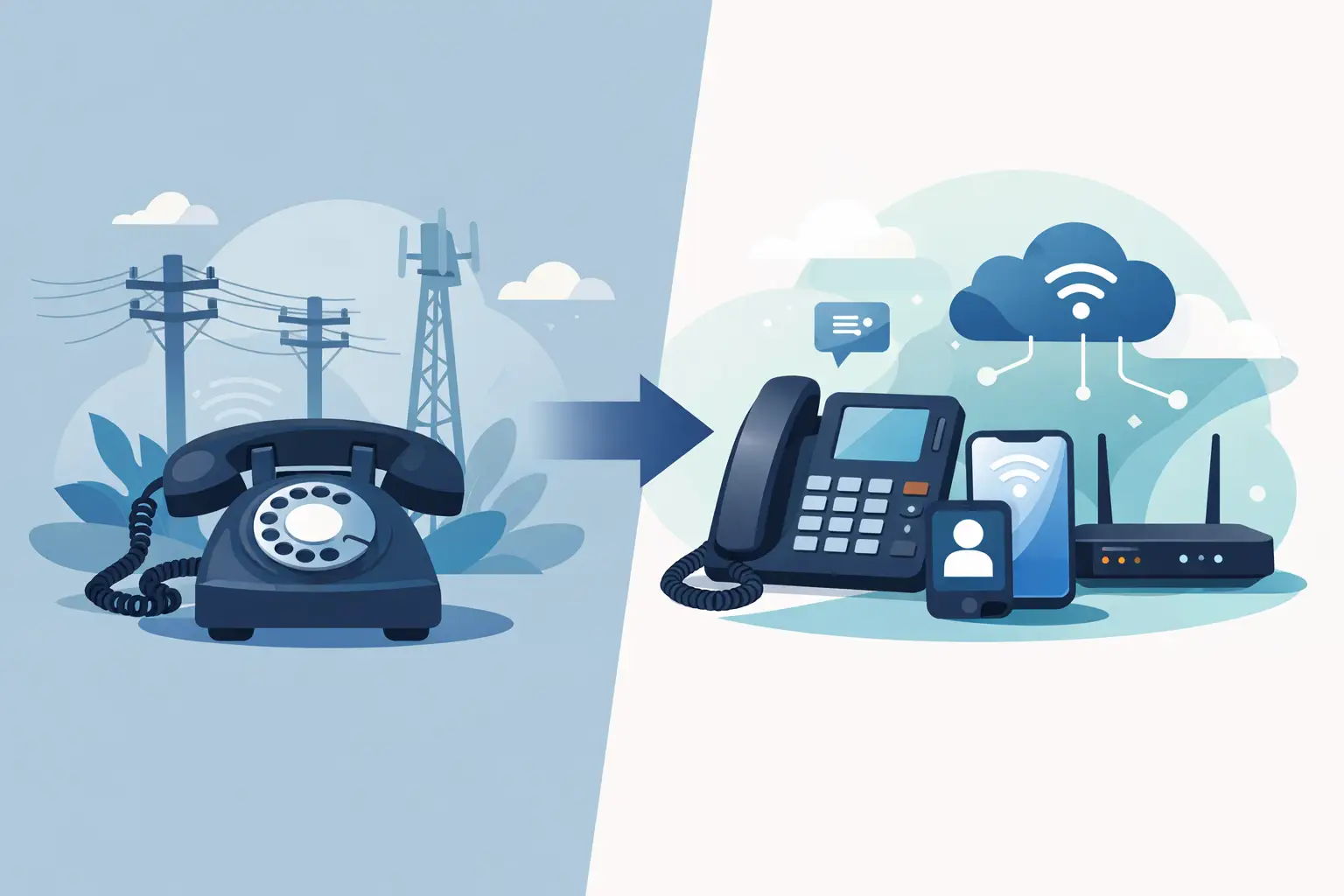
If your organization still depends on a few analog lines for elevators, alarms, faxing, point-of-sale systems, or backup calling, you already know the problem. Those lines tend to stay in place for years, quietly serving critical functions, until a carrier changes support terms, costs rise, or a site upgrade forces the question. At that point, analog line replacement options move from a technical detail to an operational priority.
For many organizations, this is not really about replacing a dial tone. It is about protecting continuity for devices and workflows that still matter while reducing dependence on aging infrastructure. That is especially true for schools, public-sector agencies, healthcare-adjacent environments, and multi-site businesses where compliance, uptime, and support responsiveness are not optional.
Why analog line replacement options matter now
Traditional copper-based POTS service has become harder to justify. Costs have increased, repair timelines can be inconsistent, and service availability is changing by market. In many cases, organizations are paying premium monthly charges for lines that support a single device or a limited emergency function.
At the same time, the devices attached to those lines have not all disappeared. Fire panels, building access systems, courtesy phones, fax machines, and elevator call boxes often remain in use long after a broader phone system has shifted to VoIP. That leaves IT and operations teams managing a hybrid environment with avoidable cost and risk.
The right replacement strategy depends on what the line supports, how critical it is, whether power backup is required, and what compliance standards apply. A line serving a break room fax machine does not need the same design as a line supporting an emergency call box in a government facility.
The main analog line replacement options
There is no single answer for every site. Most organizations evaluate analog line replacement options across three broad categories: SIP-based analog adapters, cellular line replacement, and full cloud voice migration with purpose-built support for legacy devices.
SIP-based analog telephone adapters
An analog telephone adapter, or ATA, connects a legacy analog device to an IP-based voice service. This is often one of the most practical options when an organization wants to preserve an existing device while moving transport away from copper.
ATAs can work well for fax machines, analog phones, and certain alarm or specialty devices, provided the network is stable and the device is compatible. For organizations with an existing SIP or hosted voice environment, this can be a straightforward way to retire expensive analog circuits without replacing every endpoint immediately.
The trade-off is that not every analog device behaves the same way over IP. Faxing may require careful configuration. Alarm panels and life-safety systems may need testing, certification, or an alternate architecture. Power dependency also matters. If the local network and adapter lose power and there is no battery backup, service is interrupted.
Cellular analog line replacement
Cellular gateways replace a traditional analog line by using a mobile network connection. This model is often used for alarms, elevators, remote sites, and applications where running new cabling is impractical.
The appeal is clear. Deployment can be fast, installation can be simpler than provisioning a wired circuit, and the organization is no longer tied to local copper service. In some locations, cellular can also provide a useful layer of diversity if the primary voice environment depends on wired internet access.
The limitation is that performance depends on signal quality, carrier coverage, and building conditions. Concrete structures, equipment rooms, and rural sites can all affect reliability. For critical functions, signal testing, external antenna options, and failover planning should be part of the design, not an afterthought.
Cloud voice migration with legacy device support
For many organizations, the strongest long-term answer is broader voice modernization rather than replacing one line at a time. In this model, analog requirements are folded into a cloud-based voice strategy that can support users, sites, and remaining legacy devices through SIP trunking, analog gateways, or specialized adapters.
This approach tends to make the most sense when the analog line problem is part of a larger communications issue. Maybe the business still has PRI circuits, isolated branch systems, or inconsistent service contracts across locations. Maybe remote teams need better call routing, or procurement needs one provider that can support both modernization and compliance.
The benefit here is consolidation. Instead of patching over legacy dependencies, the organization creates a roadmap that reduces line sprawl, standardizes support, improves reporting, and aligns voice infrastructure with present-day operations. The trade-off is that planning takes more discipline. Inventory, device testing, network readiness, and cutover design all matter.
How to evaluate analog line replacement options by use case
The smartest buying decision starts with the device, not the carrier bill. Before selecting a platform, identify exactly what each analog line supports and what failure would mean.
Life safety and emergency systems
These are the most sensitive use cases. Elevator phones, fire alarms, and emergency call stations may have code requirements, local authority considerations, or vendor-specific standards. Here, cost savings should never drive the decision by themselves.
For these applications, ask whether the replacement service supports battery backup, path diversity, active monitoring, and documented testing procedures. Also confirm whether the system vendor will certify the new connection method. A low-cost replacement that cannot meet inspection or uptime expectations is not a savings.
Fax and administrative devices
Fax traffic still exists in government, education, legal, and certain regulated business processes. In these cases, ATAs or virtual fax alternatives may both be worth evaluating.
If fax volume is low and the process does not require a physical machine, digital modernization may be the cleaner path. If a physical fax machine must stay in place, test the service thoroughly before rollout. Fax over IP can work well, but it is one of the first areas where poor configuration shows up.
Point-of-sale, door entry, and specialty equipment
These devices often sit outside the core IT roadmap until a move, remodel, or outage forces attention. They may work well with either SIP-based adapters or cellular replacement, depending on location and bandwidth conditions.
The key question is operational risk. A courtesy phone outage is inconvenient. A payment terminal issue affects revenue. A door entry failure affects access and security. Priority should follow business impact.
What decision-makers should look for
When comparing analog line replacement options, monthly price is only one variable. Reliability, support model, and implementation discipline have a much greater effect on long-term outcomes.
A strong provider should help you audit lines by function, identify devices that can migrate easily, and isolate the ones that require special handling. They should also be clear about power requirements, network dependencies, failover options, and support responsibilities after cutover.
For regulated organizations, compliance posture matters as much as technical fit. If voice services touch government workflows, protected environments, or strict internal security standards, the replacement architecture needs to align with those requirements from the beginning. That includes provider controls, service design, and documentation.
This is where a consultative approach has real value. Intuity, for example, works with organizations that need to modernize voice infrastructure without compromising reliability, security, or compliance. That matters when a line replacement project is tied to larger telephony consolidation or a regulated communications environment.
Common mistakes to avoid
One common mistake is assuming every analog line can move to the same replacement method. That is rarely true. The right answer may be cloud voice for one site, SIP adapters for office devices, and cellular backup for a remote facility.
Another mistake is skipping testing. Legacy devices often have quirks that are not obvious on paper. Tone detection, modem behavior, alarm signaling, and local power dependencies should all be validated before a full cutover.
The last major mistake is treating this as a carrier swap instead of an infrastructure decision. If your organization is already managing old PRIs, fragmented voice vendors, and disconnected branch systems, line replacement should be part of a broader modernization plan. Otherwise, you may reduce one bill while keeping the same operational complexity.
Choosing the right path forward
The best analog line replacement options are the ones that fit your actual environment, not the ones with the lowest advertised price. For some organizations, that means preserving a handful of analog devices through SIP adapters while moving the rest of voice to the cloud. For others, it means using cellular where wiring limitations or resilience goals make that a better fit.
What matters most is designing around function, risk, and long-term supportability. If a line supports something critical, the replacement should be engineered accordingly. If it supports an outdated process, this may be the right time to retire the process instead of recreating it.
A good replacement project leaves you with fewer unknowns, lower recurring cost, and a communications environment that is easier to support. That is the real opportunity here – not just replacing analog service, but removing one more point of fragility from your organization’s operations.