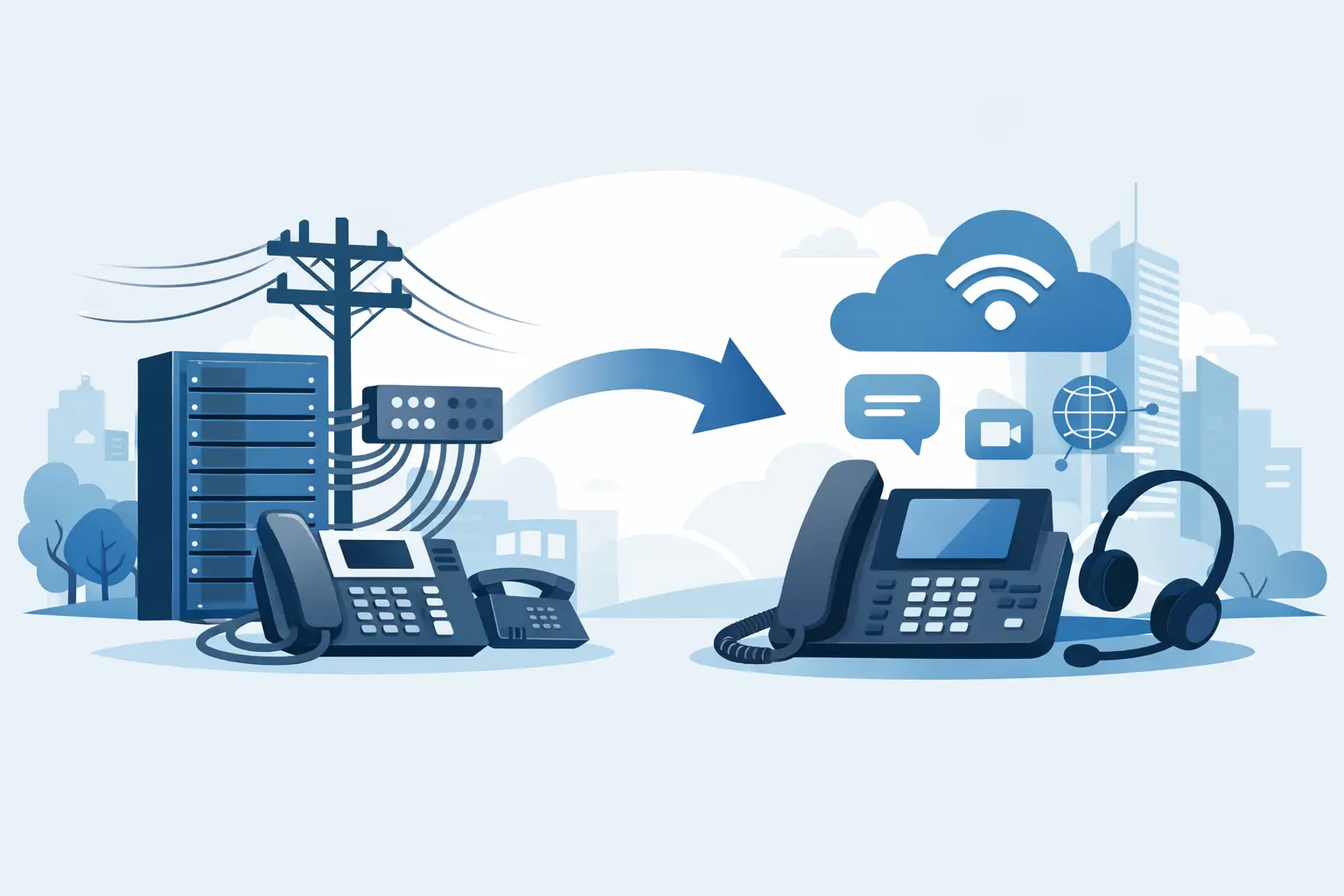
If your organization still depends on PRI circuits, the pressure to make a change is probably coming from more than one direction. Carrier support is shrinking, maintenance costs keep rising, and the limitations of fixed voice capacity are harder to justify in a business environment that expects flexibility. For IT and operations leaders asking how to replace PRI lines without creating downtime, the real issue is not just swapping one service for another. It is making sure the replacement fits your infrastructure, your call volumes, your compliance obligations, and your continuity requirements.
For most organizations, PRI replacement means moving to SIP trunking, a cloud-based voice platform, or a hybrid model that supports both legacy and modern environments during transition. The right option depends on how your phone system is built today, how many locations you support, whether your teams are centralized or distributed, and how much control you need over security and call routing.
How to replace PRI lines without creating new risks
A PRI circuit gives you predictable channel capacity, but it also ties voice service to aging infrastructure and rigid provisioning. Replacing it usually improves scalability and lowers recurring costs, but only if the migration is planned around your operational requirements.
The first step is to assess what the PRI is actually supporting. In many organizations, that includes more than standard inbound and outbound calling. A PRI may be tied to contact center traffic, fax workflows, alarm lines, elevator phones, analog devices, failover routing, or compliance-sensitive communications. If you treat the PRI as a simple dial tone service, you can miss downstream dependencies that become expensive later.
That is why a proper replacement project starts with inventory and call flow analysis. You need to know how many concurrent call paths you use at peak, which DIDs are active, how calls are routed between sites, what hardware is in place, and where the business cannot tolerate interruption. A school district, healthcare office, municipal agency, and multi-site enterprise may all have PRI lines, but they will not have the same replacement requirements.
The most common options for replacing PRI lines
For most commercial and public-sector organizations, SIP trunking is the most direct replacement. It preserves a familiar voice architecture while moving service delivery off legacy PRI circuits. If you already have a capable PBX or IP-enabled phone system, SIP often allows you to keep core equipment while modernizing connectivity. That can reduce upfront cost and speed implementation.
A fully hosted or cloud voice platform is often the better long-term move when the existing phone system is also nearing end of life. Instead of maintaining on-premise voice infrastructure and replacing the circuit underneath it, you move both calling and call control into the cloud. This is typically the stronger fit for distributed teams, organizations opening or closing sites frequently, and environments where remote access and centralized management matter.
There is also a hybrid approach. Some organizations need to support a phased migration because of contracts, device dependencies, budget cycles, or regulatory review. In that case, part of the environment may move to SIP or cloud voice first, while legacy components remain in place temporarily. This approach can be practical, but it requires careful coordination to avoid routing issues, duplicate costs, or inconsistent user experience.
What to evaluate before you replace PRI lines
Bandwidth is usually the first technical question, but it should not be the only one. Voice quality depends on more than internet speed. You also need to evaluate latency, jitter, packet loss, LAN readiness, QoS policies, firewall configuration, and WAN resilience. If voice will share the network with other critical applications, your team needs confidence that call quality will remain stable under load.
Business continuity matters just as much. PRI circuits often feel reliable because they are familiar, but modern voice architecture can be far more resilient when designed correctly. The difference is in redundancy planning. Ask how inbound calls will fail over if a site loses connectivity, whether numbers can reroute automatically, how geographic redundancy is handled, and what happens to remote users during a local outage.
Security and compliance should be part of the selection process from the start, not added after procurement. Organizations in government, education, healthcare, finance, and regulated contracting need to understand where signaling and media traffic flow, how voice services are segmented, what administrative controls are available, and whether the provider can support frameworks relevant to the environment. Replacing PRI lines can reduce operational burden, but only if the new service aligns with the organization’s compliance posture.
A practical migration path
The safest way to approach PRI replacement is in stages. Start with discovery, then validate architecture, then migrate numbers and traffic in a controlled sequence. That sounds straightforward, but the quality of each phase determines whether the cutover is routine or disruptive.
Discovery should document numbers, circuits, call volumes, hardware, carrier contracts, emergency calling requirements, and any special use cases such as paging, fax, alarms, or analog endpoints. This is also where you identify whether your current PBX can support SIP directly or whether it needs a gateway, software update, or replacement.
From there, solution design should match the business rather than forcing the business to match the service. A high-volume customer service operation may prioritize concurrent call capacity, uptime commitments, and advanced routing. A public-sector agency may place greater weight on security controls, administrative visibility, and procurement predictability. A multi-campus education environment may need centralized management with localized survivability.
Testing is the stage that organizations are most tempted to rush, and it is usually where avoidable issues surface. Before porting all numbers, validate inbound and outbound calling, emergency routing, failover behavior, fax compatibility if required, auto attendants, hunt groups, and direct inward dialing. If your organization supports after-hours operations or multiple sites, test those scenarios as well. A successful lab test is useful, but live workflow testing is what protects the business.
Cutover planning should include exact timing, stakeholder communication, escalation contacts, and rollback contingencies. Number porting is often the most visible milestone, but it is only one part of the transition. End users need to know what will change, support staff need to know what to monitor, and leadership needs confidence that interruption windows are controlled.
Cost savings are real, but they are not the only reason
Many organizations begin this process because PRI costs no longer make sense. That is valid. Legacy voice circuits can be expensive to maintain, particularly across multiple locations, and scaling them is inefficient compared with SIP or cloud alternatives. You can usually reduce line costs, simplify billing, and avoid paying for unused capacity.
Still, the strongest business case is usually broader than monthly savings. Replacing PRI lines can improve agility by making it easier to add users, support new sites, reroute calls during disruptions, and extend business calling to remote employees without separate branch infrastructure. It can also reduce the operational drag of managing fragmented carriers and aging voice hardware.
There are trade-offs, though. If your network is underprepared, moving voice onto it can expose existing weaknesses. If your organization has heavily customized legacy telephony, a like-for-like replacement may not be realistic without some process change. And if compliance requirements are strict, provider selection will take longer because architecture and controls need closer review.
Choosing a provider for PRI replacement
When evaluating providers, feature lists are less important than execution. You need a partner that can assess your current environment, explain the trade-offs clearly, and support migration in a way that fits your risk tolerance. This matters even more in regulated environments, where voice service is tied to policy, continuity, and audit expectations.
Look closely at implementation support, number porting experience, service availability, redundancy design, support responsiveness, and the provider’s ability to tailor the solution to your infrastructure. A generic offering may work for a small office, but larger organizations and public-sector environments often need more deliberate planning. Providers such as Intuity tend to stand out when the requirement is not just replacement, but secure and reliable modernization with ongoing support.
If you are still deciding how to replace PRI lines, the key is to treat the project as an infrastructure transition, not a circuit cancellation. The right move is the one that preserves call continuity, supports your users, and gives the organization room to scale without carrying forward the limitations of legacy voice. A careful migration now can eliminate recurring headaches for years to come.