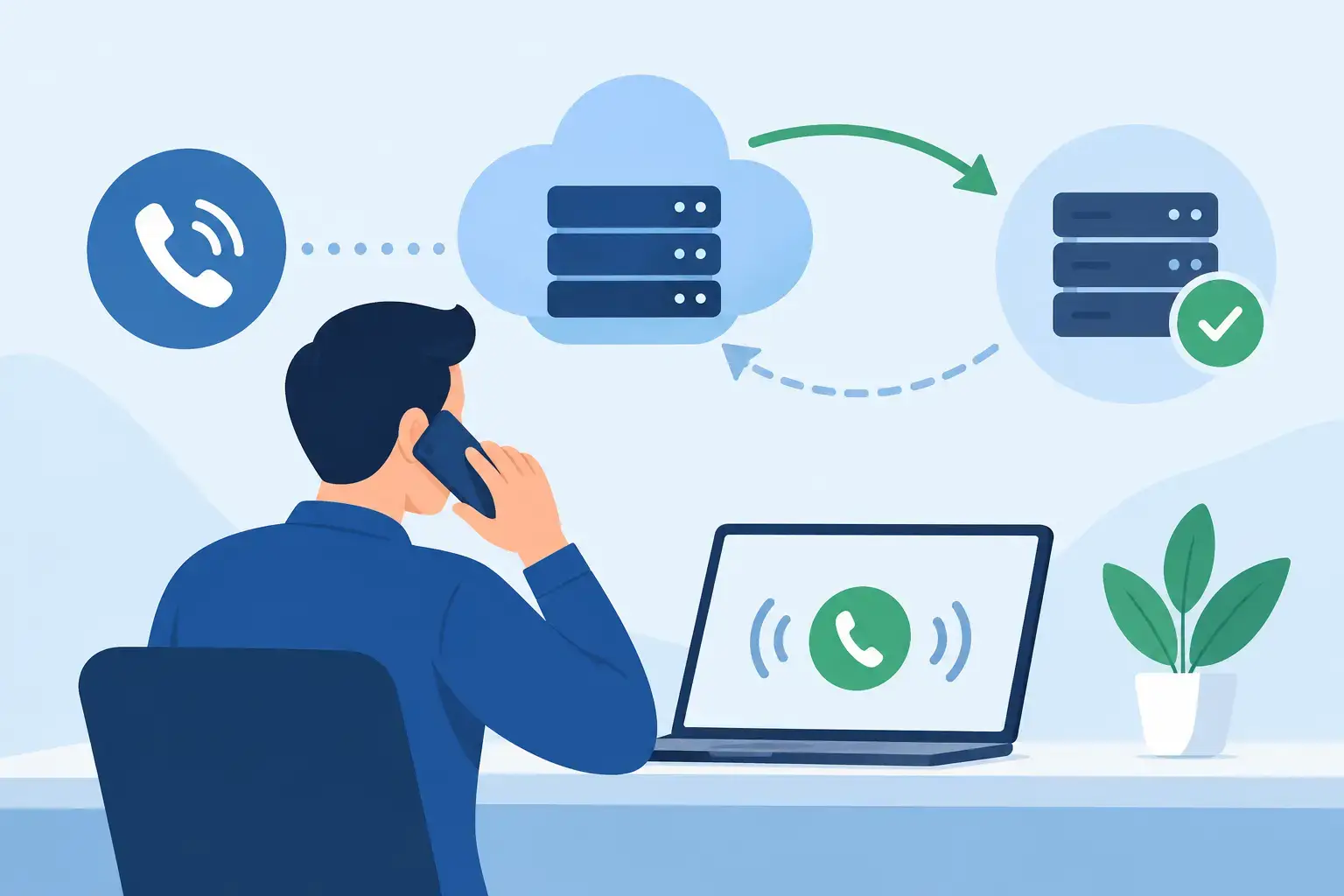
A failover design is only reliable if it performs under real conditions. Organizations that test voice failover procedures on a schedule can identify routing gaps, configuration drift, and recovery delays before an outage affects customers, employees, students, or emergency communications.
For IT and operations leaders, the objective is not simply to prove that a backup path exists. It is to confirm that priority calls reach the right people, outbound calling remains available where expected, users understand what changes during an event, and the organization can restore normal service in a controlled way. That requires a planned exercise rather than an improvised outage.
Start With a Clear Failover Objective
Voice failover means different things across different environments. A small office may need inbound calls to forward to mobile devices when its internet connection fails. A distributed enterprise may require automatic rerouting between geographically separate SIP trunks, session border controllers, and contact center queues. A school district or public agency may need to preserve specific calling capabilities while maintaining documented compliance controls.
Define what the test must prove before selecting a date. Common objectives include validating carrier-side rerouting, confirming survivability at a branch location, testing alternate internet connectivity, or verifying that Microsoft calling routes correctly when a primary component is unavailable.
Be precise about the scope. A test of inbound toll-free routing is not the same as a test of outbound PSTN calling. Likewise, a successful call to a receptionist does not prove that hunt groups, auto attendants, call queues, analog replacements, or emergency calling workflows will behave correctly. The more accurately the test objective reflects business risk, the more useful the result will be.
Map Dependencies Before You Create an Outage
Most voice disruptions are not caused by one failed service alone. They occur when a failure exposes an overlooked dependency: a local router, a firewall rule, DNS resolution, a session border controller, power at a branch, or a forwarding destination that cannot accept the expected call volume.
Document the normal call path from the originating carrier through the voice platform and into the endpoint or queue. Then document the alternate path. Include every component that must be available, who manages it, and how quickly it is expected to respond. This establishes a baseline for both technical teams and business stakeholders.
Pay particular attention to services outside the primary voice platform. If calls will forward to mobile phones, confirm that numbers are current, call acceptance is permitted, and the mobile carrier coverage is sufficient at the receiving location. If failover relies on a secondary circuit, confirm that routing policies actually prefer it when the primary circuit fails. A backup connection that has never carried production voice traffic is an assumption, not a continuity plan.
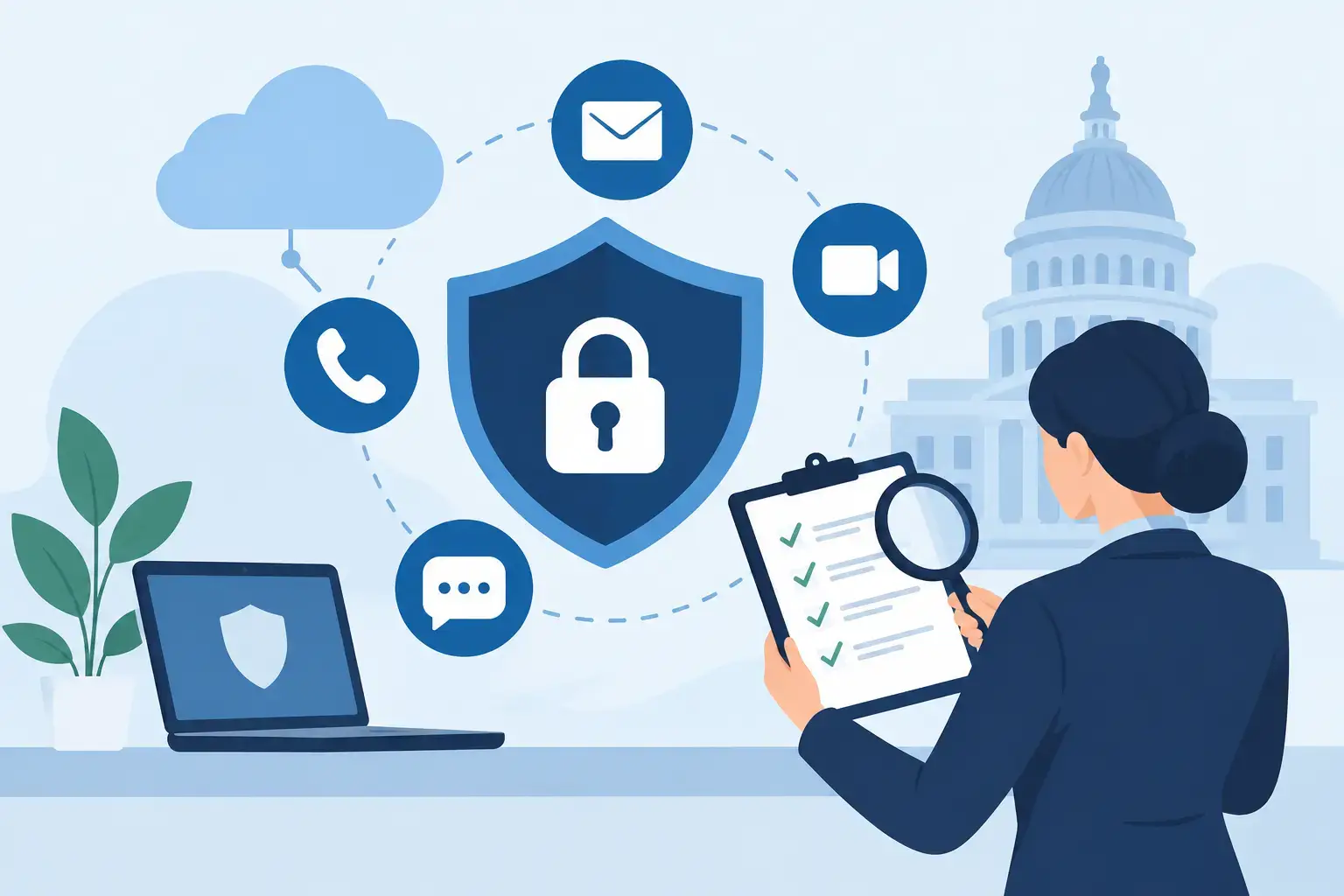
For regulated organizations, include the relevant security and change-management requirements in the test plan. The exercise should maintain appropriate access controls, preserve logs, and avoid exposing sensitive call data. Government agencies and contractors may also need evidence that the test occurred, who approved it, and what corrective actions followed.
Build a Controlled Voice Failover Test Plan
A controlled test protects operations while still creating meaningful results. Schedule it during a low-impact period, but do not choose a window so quiet that the test fails to represent actual conditions. If your organization receives substantial call volume during business hours, simulate an appropriate number of concurrent calls or test a limited production segment with clear safeguards.
Your plan should identify the test owner, technical participants, business approvers, escalation contacts, start and stop times, and rollback criteria. It should also state which services are in scope and which are expressly excluded. A test involving a single site should not accidentally trigger enterprise-wide routing changes.
Before initiating failover, capture baseline measurements. Place inbound and outbound calls, record call completion times, check caller ID presentation, verify audio quality, and confirm key features such as voicemail, transfers, auto attendants, and call queues. Without a baseline, it is difficult to distinguish a new failover issue from an existing configuration problem.
Communicate the planned test to affected teams. Receptionists, service desks, dispatch personnel, and department managers should know what may change and how to report unexpected behavior. If public-facing numbers are involved, have a concise customer communication ready in case the exercise exposes an issue that extends beyond the approved window.
How to Test Voice Failover Procedures Step by Step
Begin by confirming that monitoring, call detail records, and administrative access are available. The team needs visibility before it introduces a failure condition. Start a timestamped activity log so every routing change, test call, observation, and decision can be reviewed later.
Next, introduce the planned failure condition. This might mean disabling a primary SIP route, withdrawing a primary network connection, placing a session border controller into maintenance mode, or requesting a controlled carrier-side routing change. Use the least disruptive method that accurately tests the scenario. Pulling power from production equipment may prove a point, but it can also create unnecessary recovery complexity.
Place calls from multiple external networks, not only from internal extensions. Test calls to the main number, direct inward dial numbers, priority departments, and any published emergency or after-hours lines. Then make outbound calls if the failover design includes outbound continuity. Confirm that calls reach the expected destination, carry appropriate caller ID, and maintain intelligible two-way audio.
Test feature behavior, not just call completion. Can callers navigate the auto attendant? Does a call queue announce accurate wait information? Can users transfer calls? Are voicemails delivered? Do fax, alarm, elevator, paging, or other legacy services have separate paths that require validation? These services often remain operationally critical even when they represent a small portion of overall call volume.
Measure the actual time required for calls to reroute. Some configurations are designed for near-immediate recovery, while others depend on carrier provisioning intervals, DNS time-to-live settings, or manual approval. Neither approach is automatically wrong. The right standard depends on the organization’s risk tolerance and the function of the number being protected. What matters is that the observed result matches the documented expectation.
Once the test is complete, restore the primary path and repeat key calls. Failback deserves the same attention as failover. A route that successfully diverts calls but does not return them cleanly can create duplicate forwarding, inconsistent caller ID, or calls continuing to use a costly alternate path longer than intended.
Validate Emergency Calling Separately
Emergency calling should not be treated as an ordinary test call. Requirements vary by environment, service model, and location, and an unplanned test can trigger an emergency response. Coordinate with the appropriate public safety answering point or use an approved test process where available.
The goal is to verify that emergency calls route as designed and that location information remains accurate after relevant network, endpoint, or routing changes. Remote and hybrid workforces make this especially important. A user working from a registered corporate location may have different emergency calling behavior than a user operating from a home office or temporary site.
Document the results carefully and remediate discrepancies promptly. For organizations subject to formal compliance obligations, emergency calling records should align with the broader continuity and change-control documentation.
Turn Test Results Into Operational Improvements
A successful exercise is not one with zero findings. It is one that exposes gaps while the organization has time to correct them. Review call logs, monitoring data, participant feedback, and timing measurements immediately after the test. Separate technical issues from process issues. A correctly routed call is still a problem if frontline staff did not know how to handle it.
Assign an owner and due date to every corrective action. Update diagrams, runbooks, routing inventories, and contact lists based on what the team learned. If the test required manual intervention that was not anticipated, decide whether that step is acceptable or whether automation and additional redundancy are warranted.
Test frequency should reflect the rate of change and the consequences of downtime. Organizations with frequent network changes, distributed locations, regulated communications requirements, or high call volumes may need quarterly testing. Others may establish semiannual or annual exercises, with additional testing after major migrations, carrier changes, or office moves.
The value of cloud voice continuity comes from more than having a secondary route on paper. It comes from knowing how that route behaves when people need it. With a documented plan, disciplined testing, and a communications partner that understands your operational requirements, failover becomes a managed capability rather than a last-minute response. Intuity can help organizations design and validate voice continuity strategies that fit their infrastructure, compliance needs, and tolerance for downtime.