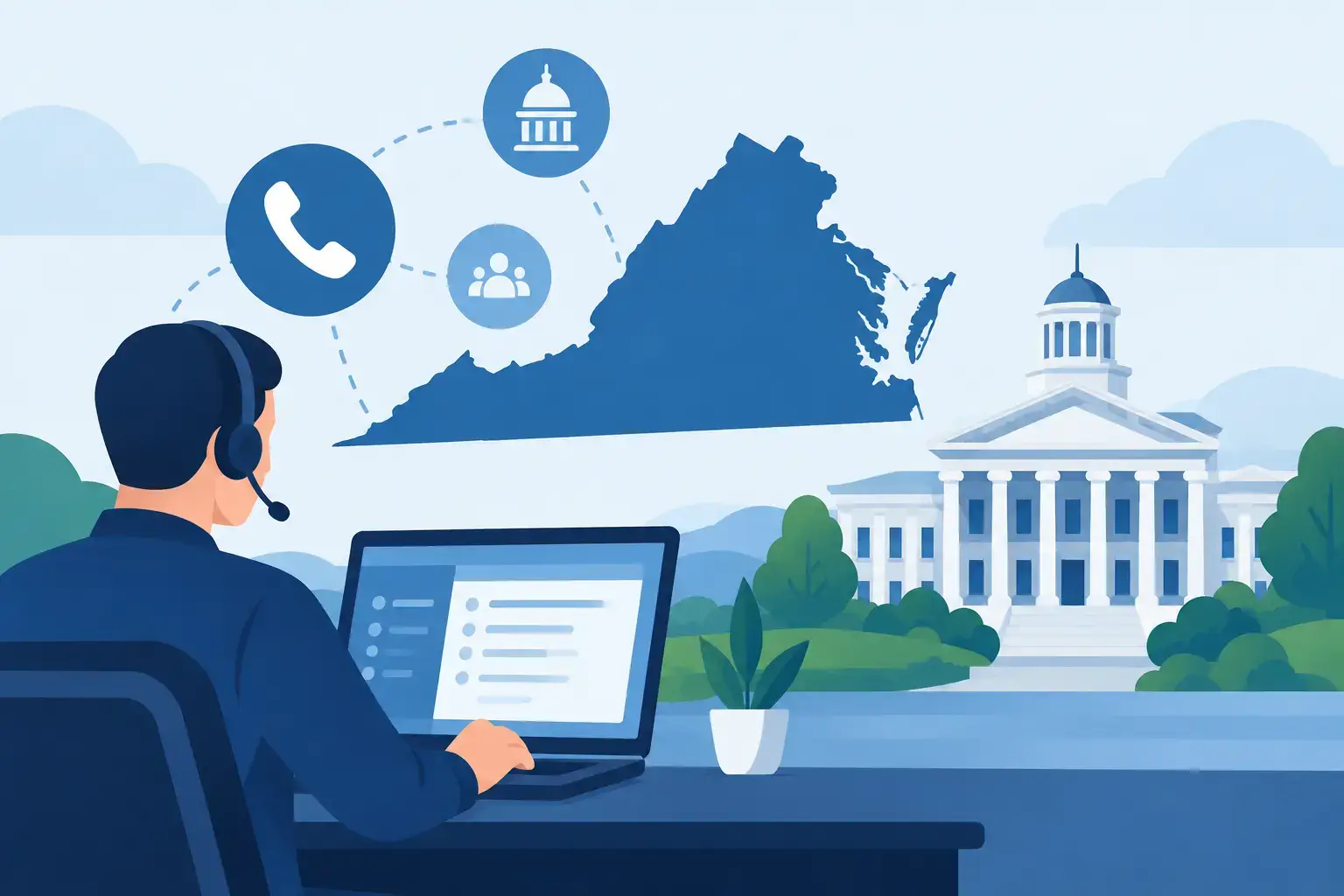
A government phone system rarely gets attention until a critical call cannot get through. For Virginia agencies, local governments, school systems, and public-sector contractors, calling infrastructure has to do more than place and receive calls. It must support continuity of operations, protect sensitive communications, route emergencies correctly, and give IT teams control over a changing mix of offices, remote staff, contact centers, and legacy lines. This Virginia government calling guide outlines how to evaluate a modern voice environment without treating cloud migration as a simple phone replacement.
Virginia Government Calling Guide: Start With Operational Requirements
The first question is not which calling platform to buy. It is which communications functions the organization cannot afford to lose. A finance department may need reliable inbound routing during tax deadlines. A school division may need every campus, classroom, elevator, alarm panel, and emergency phone reachable during an incident. A county office may need departments to continue taking resident calls if its primary facility is unavailable.
Document those functions before reviewing proposals. Inventory main numbers, direct inward dialing ranges, call queues, auto attendants, analog lines, fax dependencies, alarm circuits, elevator phones, conference rooms, and contact center workflows. Include the people and systems that use them, not just the physical locations where they sit.
This discovery work exposes a common issue: organizations often pay for traditional PRI, analog, or POTS lines because no one has confirmed what they support. Some lines can be retired. Others may require a managed replacement or a dedicated solution because they serve life-safety equipment, building access, emergency notification, or specialized devices. Moving every line to the same technology may be efficient, but it is not always operationally appropriate.
Design for the agency’s real call flows
A reliable calling design should reflect how constituents, staff, partners, and emergency responders actually reach the organization. That means mapping normal business-hour routing as well as exceptions: weather closures, after-hours incidents, high-volume events, network outages, and facility evacuations.
Cloud calling can make these scenarios easier to manage by allowing authorized administrators to redirect queues, update greetings, or reroute calls without waiting for changes to an on-premises PBX. The benefit depends on governance. Agencies should determine who can make routing changes, how changes are approved, and how they are documented. Flexibility without controls can introduce as much risk as an inflexible legacy system.
Put Security and Compliance Boundaries in Writing
Government communications requirements vary by mission, data type, funding source, and contract obligations. A public-facing administrative line does not carry the same risk as a line used by a team handling controlled unclassified information, criminal justice information, protected student data, or sensitive constituent records.
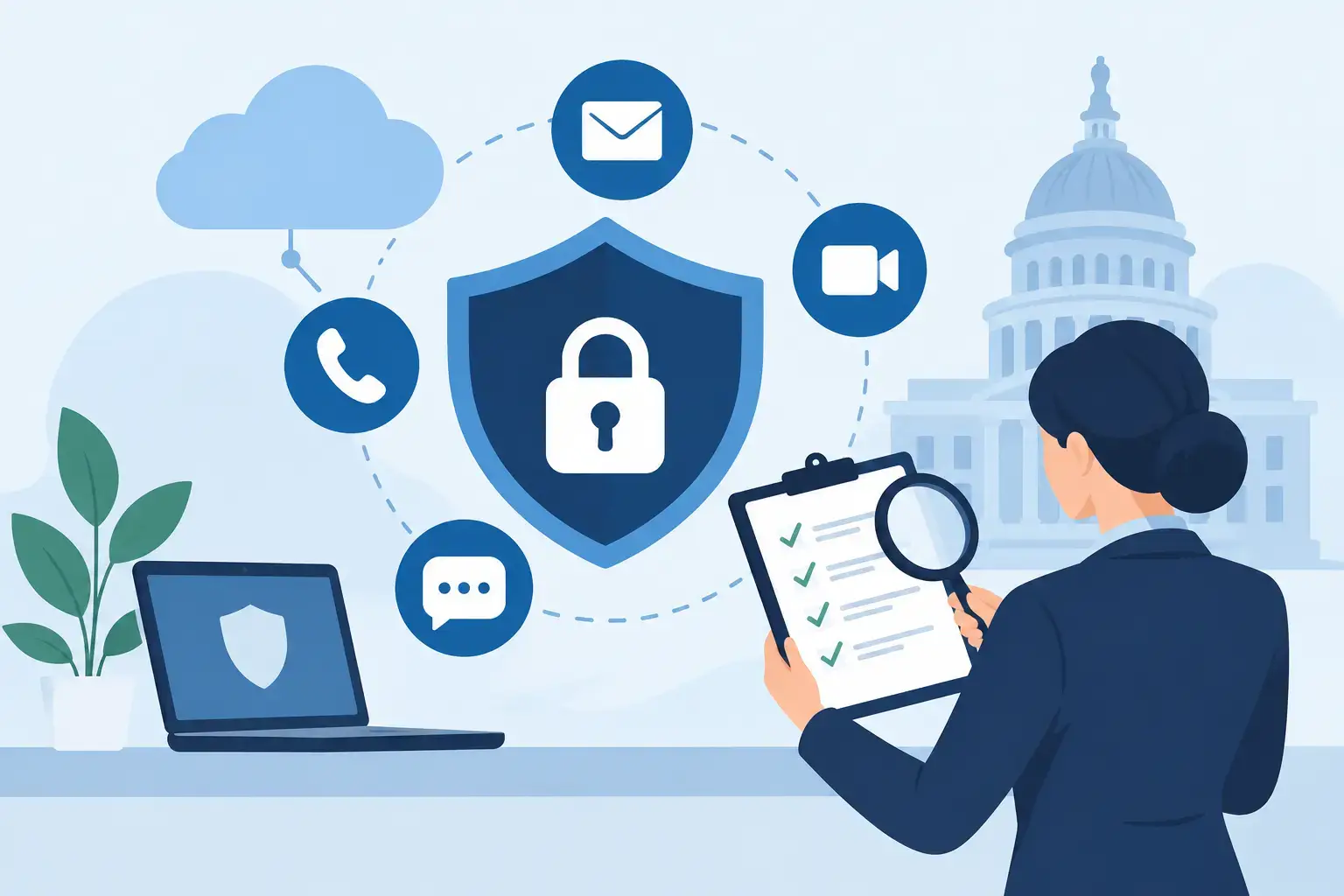
For that reason, a secure calling strategy begins with classification. Identify which users, call records, voicemail systems, recordings, integrations, and administrative portals fall within a regulated environment. Then validate that the selected communications service, identity controls, support model, and retention settings align with those requirements.
Organizations supporting federal work should be especially precise about claims related to FedRAMP, CMMC, and GCC High. A provider may offer connectivity or calling capabilities designed for a compliant environment, but that does not automatically make every workload, device, configuration, or agency implementation compliant. The authorization boundary matters. So do customer responsibilities for identity management, endpoint security, logging, user training, and policy enforcement.
For Microsoft environments, Direct Routing or Operator Connect may be appropriate ways to bring PSTN calling into Teams. The right option depends on the agency’s existing licensing, desired level of carrier control, geographic coverage, integration requirements, and support expectations. Direct Routing can offer greater flexibility for complex deployments. Operator Connect may simplify deployment for organizations that want a more standardized path. Neither approach removes the need for a clearly defined security architecture.
Protect administrative access and voice data
Calling systems are frequent targets for fraud because compromised accounts can be used to place expensive international calls, change forwarding rules, or intercept voicemail. Multi-factor authentication, role-based administration, strong password policies, conditional access, and audit logs should be baseline requirements.
IT leaders should also ask where call detail records, voicemail, transcripts, recordings, and backups are stored; who can access them; and how long they are retained. Retention should follow agency records obligations and operational needs, rather than default platform settings. If calls are recorded, the organization needs a policy for notifications, access, export controls, legal holds, and deletion.
Build Continuity Into the Calling Architecture
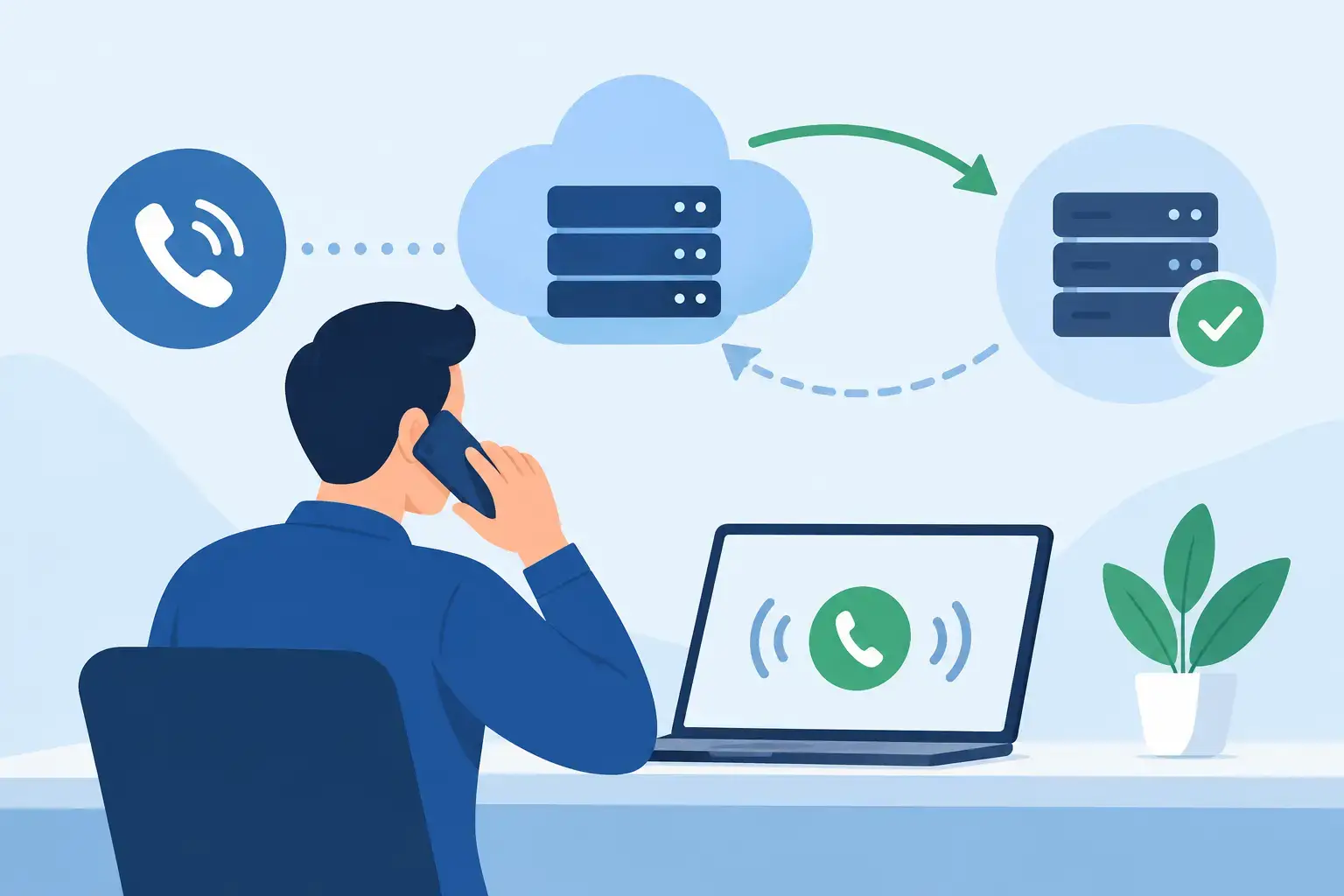
Cloud voice improves resilience only when the surrounding design supports it. If an office loses internet access, staff may still be able to use mobile applications or work from another location, but only if the organization has planned for that outcome and trained users accordingly.
A practical continuity plan considers carrier redundancy, internet diversity, power backup, device behavior, alternate routing, and support escalation. A single broadband connection, a single firewall, or a single untested call-forwarding rule can become the true point of failure. The right level of redundancy depends on the function of each site. A small administrative office may accept a different recovery objective than an emergency operations center or a high-volume public contact center.
Emergency calling deserves separate attention. Accurate emergency location information is essential for staff working across campuses, satellite offices, and hybrid locations. Agencies should verify how location data is created, maintained, and updated when employees move desks or work remotely. They should also establish internal notification procedures so security personnel or designated responders know when emergency calls occur.
Test these conditions before a real emergency forces the issue. Place test calls using the planned endpoints, validate route behavior during WAN failure, confirm that reception and security teams receive expected alerts, and review the results. A continuity plan that has not been tested is an assumption, not a control.
Plan Migration in Phases, Not as a Weekend Cutover
A large public-sector calling migration can affect every department. Attempting to convert all numbers, users, devices, and sites at once increases the chance that a small configuration error becomes a widespread service issue. Phased deployment is usually the more defensible approach.
Start with a pilot group that represents meaningful real-world conditions. Include typical office users, remote workers, reception or operator roles, a department with call queues, and any specialized users who rely on delegated calling, shared lines, paging, or integrations. Test number porting, outbound dialing, caller ID, voicemail, emergency calling, common transfer scenarios, and mobile use.
The pilot should measure more than technical success. Ask whether reception staff can handle the new console, whether department administrators can manage queues, whether help desk personnel can resolve common issues, and whether employees understand their new calling procedures. Training is not an add-on. It is part of service continuity.
After the pilot, migrate by site, function, or department based on risk. Keep a documented rollback plan for each phase, even when the vendor reports a low-risk cutover. Porting windows, carrier dependencies, and legacy equipment can create unexpected issues. Clear ownership between the agency, carrier, implementation partner, and internal network team reduces delays when a problem occurs.
Evaluate Providers Beyond Per-User Pricing
Government procurement teams need predictable costs, but the lowest quoted monthly rate can obscure important operational differences. Compare the complete service model: PSTN connectivity, implementation, number porting, endpoint support, emergency calling capabilities, service-level commitments, after-hours escalation, reporting, security controls, and the treatment of legacy lines.
Ask prospective providers how they support outages, who answers critical tickets, and whether support personnel understand regulated communications environments. A provider that can configure basic calling may not be equipped to help an agency resolve a complex GCC High calling issue, preserve service during a carrier event, or migrate specialized analog dependencies.
Also examine the network design behind the service. Redundant carrier relationships, geographically diverse infrastructure, active monitoring, fraud controls, and defined restoration processes are meaningful indicators of resilience. Request clear explanations rather than broad assurances. The goal is to understand what happens when a component fails and who is responsible for restoring service.
Questions IT and procurement teams should answer
Before selecting a calling solution, decision-makers should be able to answer four practical questions: Which services must remain available during a facility or network outage? Which users and call records fall under specific compliance requirements? Which legacy lines are truly required, and what is the approved replacement plan? Who owns administration, emergency location updates, and vendor escalation after go-live?
When those answers are clear, the technology decision becomes far easier to defend. A qualified communications partner can then tailor SIP, cloud voice, Microsoft calling, POTS replacement, and support processes around the agency’s requirements instead of forcing the agency into a generic package.
For Virginia public-sector teams, the strongest calling environment is one that is tested before it is needed, governed before it is expanded, and supported by people who understand that a missed call can quickly become an operational event.